






INDUSTRY STANDARDS & COMPLIANCE
SANS 1313 | SANS 1173:2013 | SANS 971:2013 | SANS 968:2013 | SANS 1366:2013


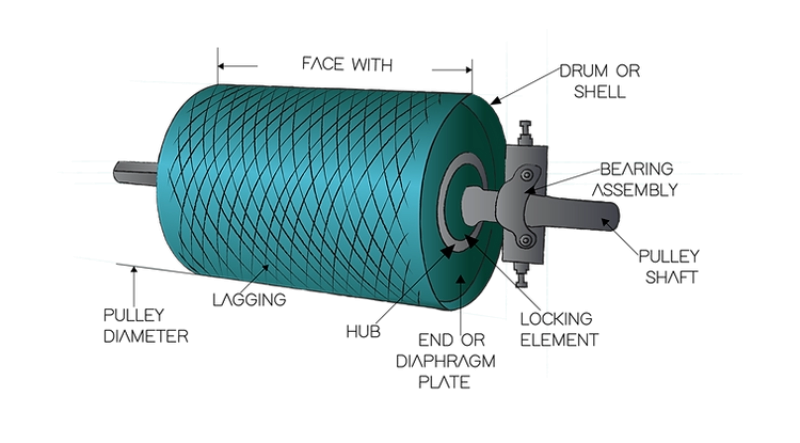
Pulley
lagging
is
the
layer
of
material
which
is
bonded
to
the
shell
of
a
Conveyor
Pulley.
It's
function
is
to
protect
the
shell
from
damage,
increase
friction
with
the
Conveyor
Belt
and
dispense
water
off
the
Pulley.
Plain
rubber
lagging
is
generally
used
on
Non-Drive
Pulleys.
This
variation
offers
greater
traction
for
the
Conveyor
Belt
without
excessively
increasing
friction
which
could
cause
the
belt
to
wear
faster.
Diamond
grooved
rubber
lagging
is
generally
applied
to
Pulleys
which
require
more
fiction
to
the
Conveyor
Belt.
The
diamond
grooves
are
more
flexible
when
compared
to
plain
rubber.
The
gaps
in
the
rubber
allows
the
lagging
extra
room
to
bend
and
move
with
the
conveyor
belt.
The
added
flexibility
allows
the
rubber
to
keep
contact
with
the
same
section
of
Conveyor
Belt
and
helps
reduce
belt
slippage.
Another
advantage
to
diamond
grooved
rubber
lagging
is
it
sheds
water
off
the
Pulley
to
further
assist
with
belt slippage and material build up.
Skirting
rubber
is
a
general
purpose
rubber
used
mainly
in
the
mining
industry
as
a
side
skirt
on
conveyor
belt
Systems
to
prevent
the
materials
falling
down.
It
is
available
in
full
width
slabs
up to 2000 mm wide and also pre-cut skirting strips.
The
rubber
is
also
used
where
a
flexible,
but
abrasive
resistant
seal is required.
SR 60
A
general
purpose
grade
of
natural
rubber
used
for
many
quarrying
and
mining
applications in dust and spillage control.
SR 40-50
A
softer
grade
natural
rubber,
with
good
tensile
and
elongations
properties,
it
is
ideally
suited
for
conveyor
skirting
applications
where
belting
wear is of concern.
INDUSTRY STANDARDS & COMPLIANCE
SANS 1313 | SANS 1173:2013 | SANS 971:2013 | SANS 968:2013 | SANS 1366:2013











WORLDWIDE CONVEYOR GROUP OF COMPANIES
COPYRIGHT @ 2026 | WORLDWIDE CONVEYOR GROUP OF COMPANIES | designed by jacqueline designs


COPYRIGHT @ 2026 | WORDLWIDE CONVEYOR GROUP OF COMPANIES
designed by jacqueline designs


WORLDWIDE CONVEYOR GROUP OF COMPANIES