

Worldwide Group of Companiesare manufacturers and suppliers of Idlers and Idler Frames.








INDUSTRY STANDARDS & COMPLIANCE
SANS 1313 | SANS 1173:2013 | SANS 971:2013 | SANS 968:2013 | SANS 1366:2013

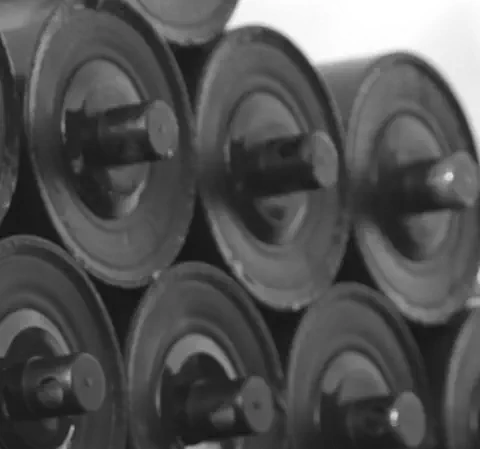

Worldwide Conveyors are
manufacturers and suppliers of Idlers
and Idler Frames.
There
are
two
categories
of
Idlers,
basically
Carrying
Idlers
and
Return
Idlers
.
However
within
these
two
categories
there
are
a
number
of
different
Idler
Sets
which
suit
various
applications.
They
are
specifically
designed
to
suit
those
operations
so
as
to
minimize
friction,
increase
material
carry
and
alleviate
unnecessary stress on the Conveyor Belt.
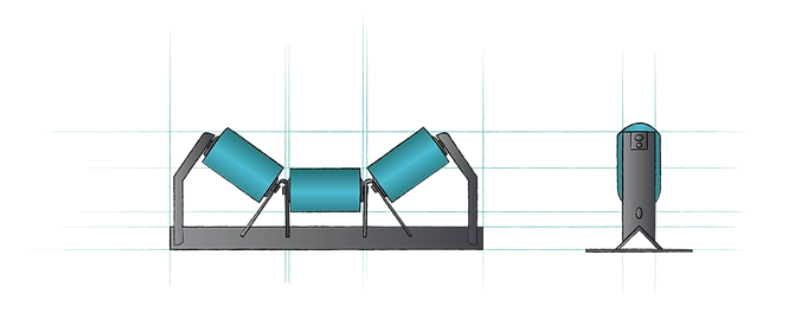
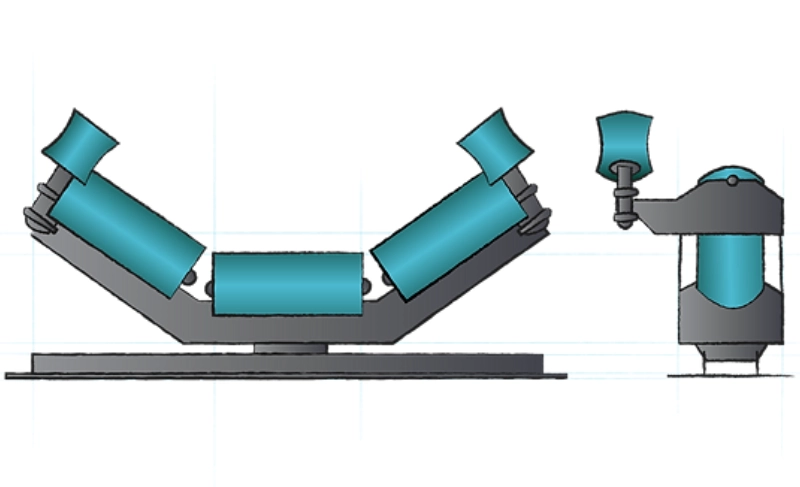
Troughing
Idlers
are
found
on
the
carrying-side
of
the
Conveyor,
and
continue
through
the
whole
length
of
the
Conveyor
at
designed
center
distances
to
each
other.
All
Idler
sets
are
the
same
and
the
distance
from
each
other
and
the
trough
angle
used
are
designed
around
friction
factors,
material
conveyed
and
tonnage
requirements.
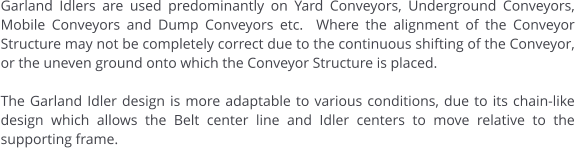
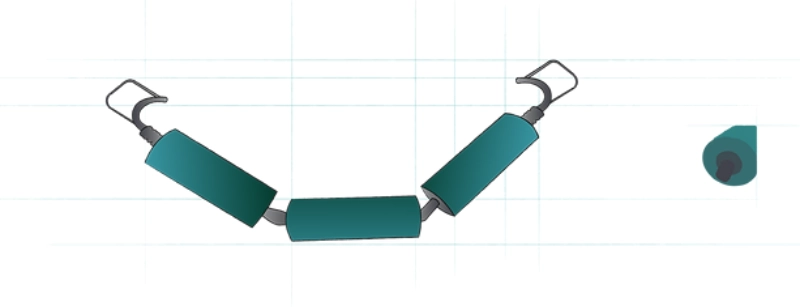
Garland
Idlers
are
used
predominantly
on
Yard
Conveyors,
Underground
Conveyors,
Mobile
Conveyors
and
Dump
Conveyors
etc.
Where
the
alignment
of
the
Conveyor
Structure
may
not
be
completely
correct
due
to
the
continuous
shifting
of
the
Conveyor,
or the uneven ground onto which the Conveyor Structure is placed.
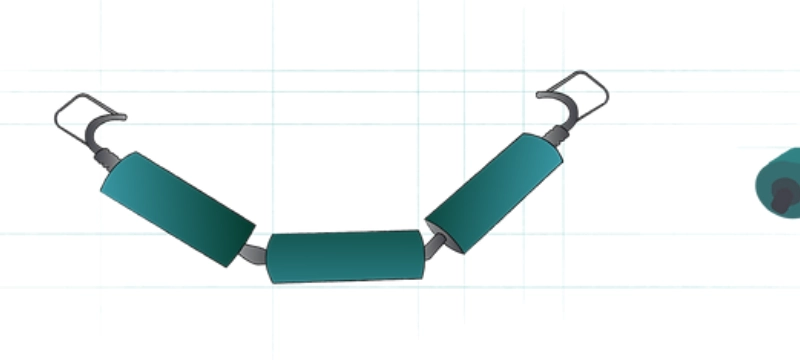
The
Garland
Idler
design
is
more
adaptable
to
various
conditions,
due
to
its
chain-like
design
which
allows
the
Belt
center
line
and
Idler centers to move relative to the supporting frame.
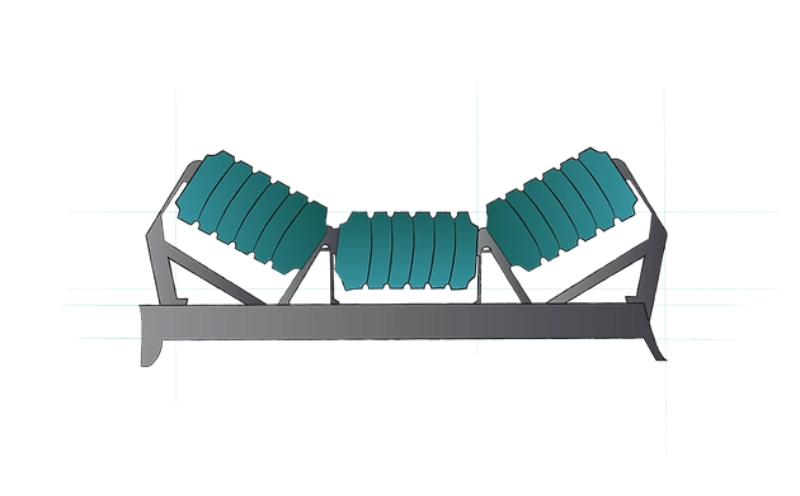
These
Idlers
are
manufactured
to
Absorb
Impact
and
Protect
the
belt from the Impact of the Material loading onto the belt.
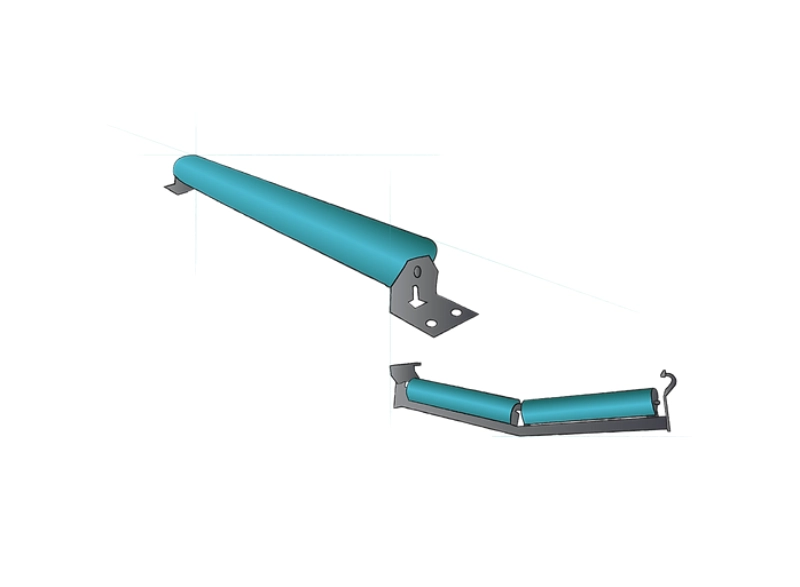
Where
Return
Idler
Sets
comprises
of
two
rolls,
a
Support
Frame
is
required
which
supports
the
Idler
Pair
and
attaches
the
Idlers
to
the
Conveyor Frame.
This
2-roll
design
forms
the
Return
Belt
into
a
'V'
Trough
and
these
Return
Idler
sets
are
referred
to
as
'V'
Return
Idlers.
The
Trough
angle
of
the
'V'
Return
Idler
is
usually
10
degrees
and
this
feature
has
been
developed
to
assist
with
Belt
training
along
the
Return
Strand.
In
addition
to
the
fixed
base
frames
for
Return
Idlers,
Garland-Type
Return
Idlers
are
also
available.
Which
like
their
equivalent
Troughing
Idlers
are
more
tolerant
of
Conveyor
Structure
misalignment.
In
spite
of
the
correct
alignment
of
a
Conveyor
Structure
and
Belt
Splice,
it
is
a
common
occurrence
for
a
belt
to
want
to
misalign
at
times.
Mainly
as
a
result
of
incorrect
material
loading
(off
centre)
or
in
cases
where
a
Conveyor
is
mounted
onto
a
Mobile
Stacker
or
Reclaimer
where
the
fall
across
the
boom
causes
the
belt
to
move
to one side.
In
cases
where
the
belt
misaligns,
severe
damage
can
be
done
to
the
belt
should
the
belt
rub
against
a
Fixed
Structure,
the
Head
Chute or Conveyor Stringers
INDUSTRY STANDARDS & COMPLIANCE
SANS 1313 | SANS 1173:2013 | SANS 971:2013 | SANS 968:2013 | SANS 1366:2013











WORLDWIDE CONVEYOR GROUP OF COMPANIES
COPYRIGHT @ 2026 | WORLDWIDE CONVEYOR GROUP OF COMPANIES | designed by jacqueline designs


COPYRIGHT @ 2026 | WORDLWIDE CONVEYOR GROUP OF COMPANIES
designed by jacqueline designs


WORLDWIDE CONVEYOR GROUP OF COMPANIES